
Teacher’s CornerLesson No. 07
What to Expect at Your First Women’s Fitness Class
Thinking about joining a women’s fitness class? Here’s what to wear, what to bring, how the workout may unfold, and what to know before your first session.
By Lujain7 min read
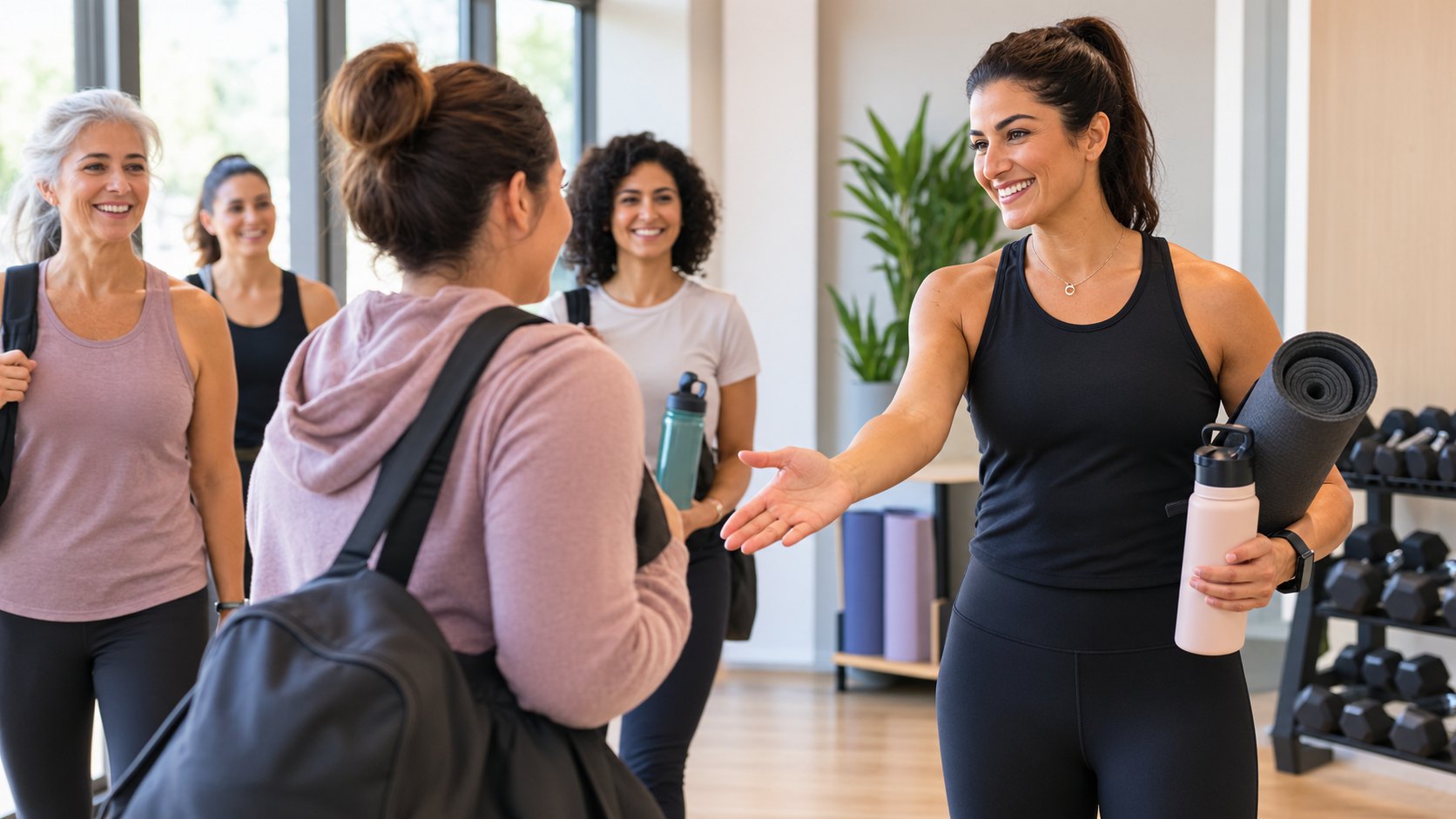
I’ve noticed that one of the hardest parts of trying a fitness class often happens before the workout even begins.
It’s walking into a room where you don’t know the people, the exercises, or what to expect.
You might wonder whether everyone else will be fitter, whether you’ll keep up, or whether you’ll feel out of place.
Those questions are understandable.
And they’re exactly why I believe a welcoming environment and clear instruction matter so much.
Your first class isn’t about proving how fit you are.
It’s about discovering what the experience is like, learning how the movements work, and finding an approach that feels right for you.
A little preparation can make that first visit feel much more familiar.
Before You Arrive: Keep It Simple
You don’t need an expensive fitness wardrobe or special equipment to attend most beginner-friendly classes.
Comfortable clothing that allows you to move freely is usually a good starting point.
Supportive athletic shoes may be appropriate depending on the class format.
Bring water, and consider a small towel if you tend to get warm during exercise.
Before attending, check whether the class requires anything specific, such as a mat, resistance bands, or other equipment.
Some studios provide equipment, while others ask participants to bring their own.
If you’re unsure, ask the instructor or organizer.
It’s also helpful to arrive a little early.
That gives you time to find the room, get settled, and ask any questions before the session begins.
Walking Into the Room for the First Time
One of the most unfamiliar parts of attending a new class can be simply walking through the door.
You may see people chatting with friends, setting up equipment, or preparing for the workout.
Some participants may have attended for months.
Others may be completely new, just like you.
If the instructor is available before class, introduce yourself and mention that it’s your first session.
You might say:
“Hi, I’m new today. Is there anything I should know before we start?”
That’s enough to begin a helpful conversation.
Depending on the class, the instructor may explain the format, point out equipment, or offer general guidance.
The goal is to understand what to expect, not to prove anything on your first day.
Imagine Your First Ten Minutes
You arrive a little early.
You find the room, introduce yourself, and choose a comfortable place to begin.
The instructor explains the first movements.
You start at a manageable pace and focus on understanding the exercises.
Some movements feel familiar. Others take practice.
By the end of the session, you may not remember every exercise, but you understand a little more about how the class works.
And the next visit may feel more familiar.
This is just one example. Every class has its own format and atmosphere.
What Usually Happens During a Fitness Class?
Every class is different, but many group fitness sessions follow a general structure.
The Warm-Up
The session may begin with gentle movements designed to prepare your body for exercise.
This could include walking in place, easy mobility exercises, or movements similar to those you’ll perform later.
The purpose is to gradually increase activity and become comfortable moving.
The Main Workout
The central portion of the class depends on its focus.
A strength-based session may use dumbbells, resistance bands, bodyweight movements, or other equipment.
A cardio-focused class may involve rhythmic movements, intervals, or other activities that raise your heart rate.
Some classes combine strength, mobility, and cardiovascular exercise.
The instructor may demonstrate movements and explain the intended pace or technique.
The Cooldown
Many classes finish with a gradual reduction in intensity and some gentle mobility or stretching.
This provides an opportunity to transition out of the workout.
The exact structure, equipment, and duration depend on the class you’re attending.
What If You Can’t Keep Up?
Participants in a fitness class may have very different levels of experience.
Someone who has attended for years may be familiar with the movements.
A beginner may need more time to understand the technique or pace.
Depending on the class, there may be options to reduce resistance, slow the movement, take a short break, or use an alternative exercise.
For example, you might choose a lighter dumbbell, reduce the depth of a squat, or perform a movement at a slower pace.
Not every exercise has a suitable modification for every person.
If a movement causes pain or doesn’t feel appropriate, stop and ask for guidance.
The goal is to participate at a level that’s appropriate for you, not to match someone else’s pace.
How Do You Know Which Weights to Use?
If your class includes strength exercises, you may see several sets of dumbbells.
Choosing the right weight can feel confusing at first.
A useful starting point is to select resistance that allows you to perform the movement with control.
The final repetitions may feel challenging, but you should still be able to maintain appropriate technique.
Different exercises may require different weights.
For example, the weight you use for a squat may not be suitable for a shoulder raise.
At LU Wellness, we use a simple teaching idea:
Control. Challenge. Progress.
Learn the movement, choose an appropriate challenge, and build gradually.
For a more detailed explanation, read our Teacher’s Corner lesson, “How Heavy Should You Lift? A Beginner’s Guide to Choosing Weights.”
What Should You Tell the Instructor?
You don’t need to share your entire personal history.
But some information may help an instructor understand your experience and direct you appropriately.
For example, you may want to mention:
- That you’re attending your first class.
- Whether you’re new to strength or group fitness.
- Any movements you’re unsure about.
- Whether you need clarification about the equipment.
- Relevant exercise restrictions or concerns you’re comfortable discussing.
If you have a medical condition, injury, or other limitation that could affect exercise, seek advice from an appropriate healthcare professional when needed.
A group fitness instructor can provide general exercise guidance within their qualifications, but a group class is not a substitute for individualized medical or rehabilitation care.
Clear communication can make the experience more comfortable.
A Few Simple Things to Know About Class Etiquette
Every studio has its own guidelines, but a few habits can help make the experience comfortable for everyone.
Arrive early when possible.
This gives you time to get settled without interrupting the session.
Respect the shared space.
Follow the studio’s guidance about equipment, belongings, and personal space.
Ask questions when appropriate.
If you don’t understand a movement or instruction, it’s reasonable to ask for clarification.
Be considerate of others.
Everyone is there for their own reasons, and participants may have different abilities and preferences.
Check the studio’s policy if you’re running late.
Some classes have specific rules about entering after the warm-up has begun.
These small habits help create a welcoming environment for everyone.
What Happens After Your First Class?
You may leave feeling energized, tired, proud, or simply pleased that you tried something new.
You might also notice some muscle soreness over the following day or two, especially if you’ve performed unfamiliar exercises.
Mild muscle soreness can occur after exercise, but severe pain, unusual swelling, significant weakness, or other concerning symptoms should not be dismissed as normal.
Give yourself appropriate time to recover.
Hydration, food, sleep, and a manageable activity schedule all support recovery.
Think about what you enjoyed, what felt challenging, and what you’d like to understand better.
Sometimes the first session feels unfamiliar simply because everything is new.
Your First-Class Checklist
Before heading to your first women’s fitness class, review these simple questions.
Have I confirmed the class details?
Check the time, location, registration requirements, and whether the session is suitable for beginners.
Do I know what to wear and bring?
Choose comfortable clothing and confirm whether you need shoes, water, a mat, or equipment.
Can I arrive a little early?
A few extra minutes can help you get settled.
Do I have questions for the instructor?
It’s reasonable to ask about equipment, movements, or class structure.
Am I prepared to work at an appropriate pace?
Focus on learning and moving with control rather than matching everyone else’s intensity.
Do I know when to ask for help?
If something is unclear, uncomfortable, or painful, stop and seek appropriate guidance.
You don’t need to memorize this checklist.
It’s simply a way to make your first visit feel a little more familiar.
Ready for your next step?
If you’d like to learn strength training in a supportive, women-focused setting, Stronger with Lu is a place to begin, or you can reach out with any questions first.
No extremes.No judgment.Just a realistic place to begin.
Share this lesson
Know someone who might find this helpful? Share the lesson with them.
LU Start
Not sure what your next step should be?
LU Start can help you find a simple starting direction based on where you are today.
More lessons
- How to Start Strength Training When You Don’t Know Where to Begin
- You Don’t Have to Be Fit to Start
- How Heavy Should You Lift? A Beginner’s Guide to Choosing Weights